From selecting the appropriate trust structure to choosing a trustee and funding the trust, there are several key steps to consider. Understanding how each step fits into the broader estate planning process can help you make informed decisions and build a plan that supports your loved one’s future.
1. Determine the Trust Type
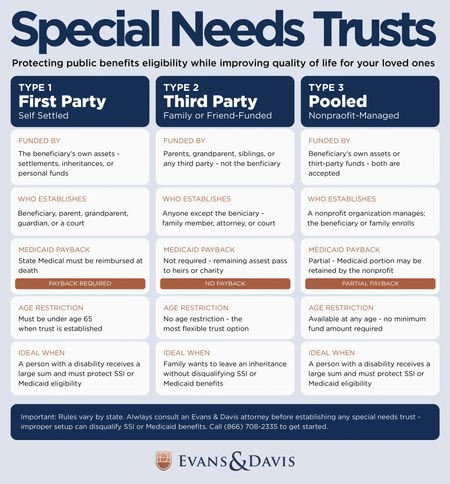
The first step in establishing a special needs trust is determining which type best fits your family’s situation. The appropriate trust often depends on where the assets funding the trust originate. Choosing the wrong type of trust can create unintended tax consequences and may affect a beneficiary’s eligibility for important government benefits.
The following are the three most common types of special needs trusts:
2. Hire a Qualified Attorney
Because special needs trusts must comply with both federal benefit rules and state-specific laws, it is extremely important to work with an attorney who focuses on special needs planning. A properly drafted trust does more than distribute assets. It helps preserve eligibility for programs such as Supplemental Security Income, or SSI, and Medicaid while reflecting your family’s long-term goals.
An experienced estate planning attorney can determine which type of trust is appropriate, ensure the document contains required legal provisions such as sole-benefit language when applicable, and advise you on Medicaid rules, which vary significantly from state to state. Their guidance can help reduce the risk of costly mistakes that may affect the trust’s effectiveness or a beneficiary’s benefits.
3. Appoint a Trustee
A trustee is responsible for managing the trust, overseeing investments when appropriate, maintaining records, and making distributions in accordance with the trust’s instructions. Because these responsibilities often continue for many years, selecting the right trustee is one of the most important decisions you can make for the trust’s long-term success and effective trust administration.
Families should also consider naming a successor trustee who can assume responsibility if the original trustee is no longer able or willing to serve. Many families choose to appoint a professional co-trustee alongside a trusted family member. This approach combines personal knowledge about the beneficiary’s circumstances with professional experience navigating trust administration and government benefit requirements.
4. Draft and Execute the Documents
Once key decisions have been made, your attorney will prepare the legal documents needed to establish the trust. These documents are customized to reflect your family’s goals, the beneficiary’s needs, and the type of trust being created.
The trust document generally identifies the beneficiary, outlines the trustee’s powers and responsibilities, establishes standards for distributions, specifies what expenses the trust may or may not pay, and includes Medicaid payback provisions when required by law. Carefully drafting these provisions helps ensure the trust operates as intended while supporting the beneficiary’s long-term needs.
The trust is not legally effective until the required documents have been properly signed and notarized. Completing these formalities is an essential step before moving on to funding the trust.
“One of the greatest concerns is ‘this child relies on me for everything; how can I make sure that they are set up, at least financially?’ It’s not just about setting up a trust account, but also talking through how much we anticipate they might need and who we trust to put in place to be the trustees or their guardians, or long-term caretakers.”

5. Get a Tax ID and Fund the Trust
After the trust has been established, it must be prepared to receive assets. Because a trust is a separate legal entity, it generally requires its own Employer Identification Number, or EIN, for tax purposes, depending on the type of trust and how it will be administered.
The next step is funding the trust, which means transferring assets into it so the trust can carry out its intended purpose. Common funding strategies include naming the trust as the beneficiary of life insurance policies or retirement accounts rather than the individual beneficiary, and transferring eligible bank accounts or other titled property into the trust’s name.
Like many trusts, a special needs trust can only accomplish its goals if it is properly funded. Simply creating the trust documents without transferring assets may leave the trust unable to provide the intended financial support.
6. Notify Agencies and Review
Once the trust is active and funded, additional steps may be necessary to ensure it functions as intended. If the beneficiary receives SSI or other needs-based government benefits, the appropriate agencies, such as the Social Security Administration, should be notified about the trust.
Families and trustees should also understand how distributions may affect government benefits. In some cases, using trust funds to pay for certain basic living expenses, such as food or shelter, may reduce a beneficiary’s monthly SSI benefits under rules governing in-kind support and maintenance. Professional trustees often develop distribution policies designed to help avoid these issues while continuing to support the beneficiary’s needs.
Finally, the trust should be reviewed periodically as laws, family circumstances, and financial needs change. Regular reviews help ensure the trust continues to serve its intended purpose for years to come.
Start Planning Your Special Needs Trust Today
At Evans & Davis, we help families navigate every stage of the estate planning process, from selecting the appropriate type of trust and funding it to planning for its long-term administration. Our attorneys work closely with you to create a strategy that reflects your family’s goals and provides lasting support for the people who depend on you most.
Call 866-708-2335 or contact us online to begin building a special needs trust that helps protect your loved one’s future.