
Home | Estate Planning | Estate Planning for Married Couples
Guide to Estate Planning for Married Couples
Whether you’re excited for your upcoming honeymoon or celebrating 30 years of the life you’ve built together, now is the best time to ensure your family’s security by planning for the future. All married couples can benefit from estate planning and the peace and confidence that comes with knowing your loved ones are protected.
What Is Estate Planning for Married Couples?
Estate planning for married couples involves drafting and executing legal documents to outline your wishes if one of you passes away or becomes incapacitated. Instruments like wills and trusts enable couples to distribute their assets to loved ones smoothly, arrange for the custody and care of children, and appoint others to make key medical and financial decisions if they become incapable of handling their affairs.
Do All Married Couples Need an Estate Plan?
Yes, all married couples need to have an estate plan. If you or your spouse dies or becomes incapacitated, a solid estate plan can help your family avoid stressful and contentious legal battles over your affairs and your assets.
Why Is Estate Planning a Priority for Newlyweds?
After taking the first step in building a life together, newlyweds can build a strong foundation for their new family by planning for their financial futures and medical contingencies.
Estate Planning Actions Every Newlywed Couple Should Do:
- Draft a will and designate beneficiaries of your estate
- Name people you trust as executors, trustees, and guardians of your children
- Determine who you want to make health care and financial decisions if you cannot
- Discuss advance health care directives and end-of-life plans
- Consult an experienced estate planning lawyer
“When my husband and I did our estate plan, we left with a peace I didn’t even know I needed.”
What Documents Should Be Included in a Married Couple's Estate Plan?
Married couples need to complete a variety of financial and medical documents to build a solid estate plan, including:
| Type of Document | What it Does |
|---|---|
| Revocable Living Trust | Allows you to control the distribution of your assets privately, without the need for probate |
| Pour-Over Will | Plans for any assets that weren’t in your trust at the time of your death |
| Financial Power of Attorney | Allows you to designate a trusted agent to make key financial decisions in your name and handle your affairs while you’re incapacitated |
| HIPAA Authorization | Allows you to designate someone to obtain your medical information and assist you with treatments |
| Health Care Power of Attorney | Allows you to appoint a trusted agent to make important medical decisions for you while you’re incapacitated |
| End-of-Life Document or Living Will | Specifies your wishes for end-of-life care, including do-not-resuscitate orders and refusing certain treatments |
Should a Married Couple Have Separate Plans?
Most newlyweds make joint estate plans, which work best when the couple enters the marriage with few preexisting assets or other complications. However, those with blended families, previous marriages, or individual ownership of significant assets should consider creating separate estate plans, as this can provide more flexibility in addressing complex situations.
When Should Married Couples Update Their Estate Plan?
Estate planning is never a one-and-done activity—your documents should adapt to the inevitable changes you and your spouse will encounter throughout your life. A good rule of thumb is to review your estate plan every two to five years, or after a significant life event, such as a birth or death in the family.
What Are the Benefits of Starting an Estate Plan Sooner Rather Than Later?
Having a robust estate plan in place early in your marriage can give you peace of mind knowing that your family will be taken care of if tragedy strikes. Putting off estate planning can put your family’s security at risk in the event of a sudden death or illness, and it’s easier to adjust an existing plan than to make one from scratch.
What Are Common Estate Planning Mistakes Made By Married Couples?
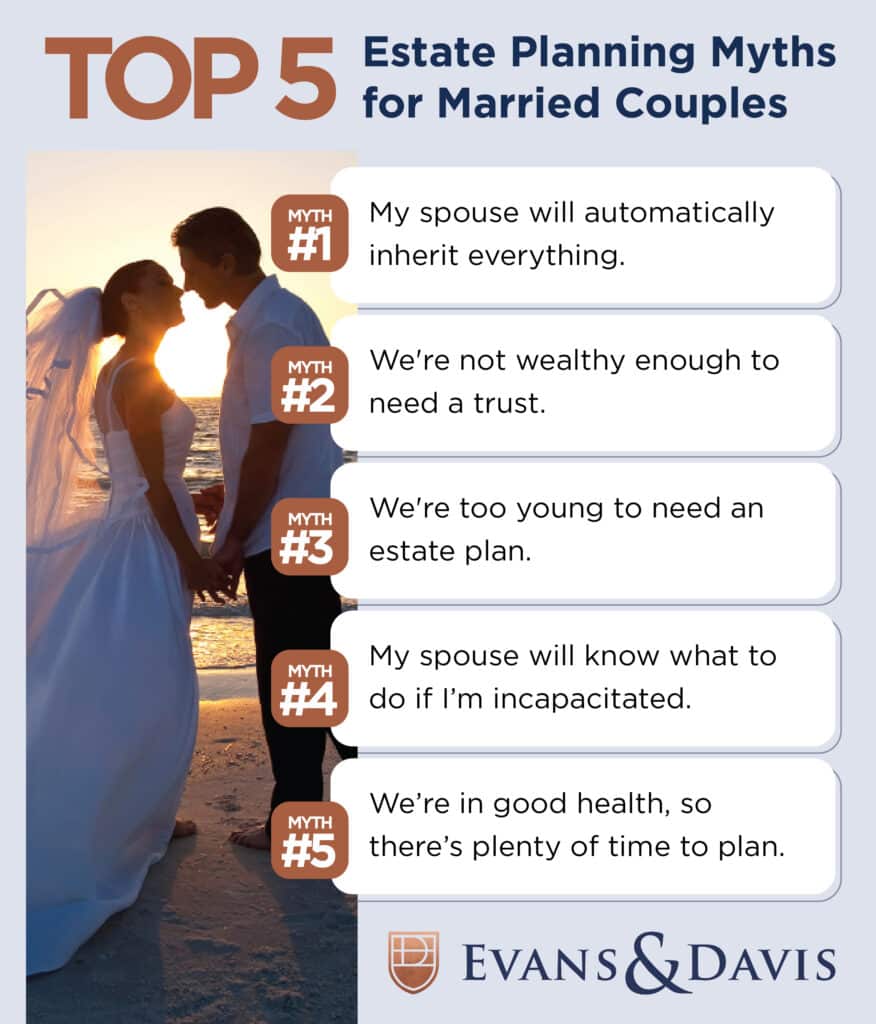
Few newlyweds begin the estate planning process already knowing everything they need to know. Whether from reading incorrect information on the internet or by developing misconceptions on their own, married couples may make mistakes based on how they believe estate planning works. Common mistakes include assuming having a will means their property won’t go through probate, or thinking they won’t have to update their documents once they’ve been executed.
What Happens if a Married Couple Does Not Have an Estate Plan?
If you or your spouse dies without an estate plan in place, state intestacy laws will determine what happens to your assets. Some states automatically have the surviving spouse inherit, while others do not. If you don’t have a will, your assets might be distributed in a way that doesn’t align with your wishes. In addition, leaving your family to navigate state law without a plan can lead to a lengthy and drawn-out process in probate court, potentially driving rifts between your loved ones over who should inherit what.
It’s Not If, But When. Everyone needs an estate plan to address life’s unexpected twists and turns. The right estate planning advice for your unique situation is crucial to ensure you and your spouse are prepared for anything life throws at you.