
Home | Business Law
Business Law
Our team helps business owners, entrepreneurs, and companies of all sizes navigate the challenges and opportunities of running a business. Evans & Davis attorneys bring legal knowledge and real-world business insight, offering practical, creative solutions that protect client interests and support growth. Whether launching a new venture, managing day-to-day operations, or planning for succession, we provide trusted guidance at every stage.

Step 1: Schedule Your Initial Meeting
Start by contacting our firm. Our team members will then work with you to coordinate a meeting date and time most convenient for all involved parties.
Step 2: Tell Us About Your Business
You will be provided with a simple and confidential Business Planning Intake Form to assist you with gathering the necessary information to assist your attorney in evaluating your business needs. If you have any existing documentation regarding the company, please provide that in advance with your completed intake form.


Step 3: Meet With Your Attorney
During your initial consultation with your attorney, you will learn about the purpose of creating corporate entities to protect your assets and your family. Additionally, we will discuss the differences among LLC’s, corporations and partnerships. Your attorney will coordinate with your accountant to assist in determining tax ramifications relating to your enterprise. Your initial consultation normally lasts 1.5 hours and culminates in your attorney providing you with a proposed course of action with the associated fees to assist you.
Step 4: Finalize Your Business Needs
Whether we are completing the formation of a business, executing a buy-sell agreement, planning for succession, closing on the purchase or sale of a business or finalizing a transactional matter, your attorney will advise and assist you throughout the process.
Frequently Asked Questions
Who Do We Serve?
We serve a wide range of clients—entrepreneurs, family-owned and closely held companies, partnerships, joint ventures, and public corporations. From start-up to succession, we walk alongside businesses as they grow and evolve.
Which Industries Do We Have Experience In?
Our experience spans industries and includes financial services, distribution and logistics, health care, manufacturing, hospitality, retail, education, professional services, technology, entertainment, and construction.
What Services Do We Provide?
Our services include:
- Entity formation and structuring (corporations, partnerships, LLCs)
- General business guidance and counsel
- Business succession plans
- Buy-sell agreements
- Strategic alliances and joint ventures
- Contract drafting and negotiation
Client Testimonials
Evans and Davis handled a business acquisition for me. They were so professional and accessible, and my attorney Ryan Raupe was attentive and delivered my message to the opposing council with great clarity. I would recommend Ryan and his firm anytime.
It was a pleasure doing business with Evans & Davis. Everyone was very professional and did a great job getting our estate all figured out. We are so glad to be associated with them.
I would recommend this firm to any of my friends and family who need estate planning or business planning! Bryan’s team is super helpful, responsive, and efficient.
Mitch has done an incredible job doing estate planning and business succession for many of my clients! I highly recommend him to everyone!
I have been with working with Mitch and his team for 3 years now and they never disappoint. Mitch’s professionalism and expertise working with small to medium size businesses is such a game changer. My clients love how they simplify the process and have consistent follow up as they finalize their plans. I highly recommend Mitch and his team!!

The number of female-owned businesses is growing every year, and that’s incredible. Whether you’re launching your first venture or scaling an existing operation, one important element that often gets overlooked is proper legal structuring. Setting up the right business entity can help protect your personal assets from certain business-related liabilities and provides a foundation for growth.
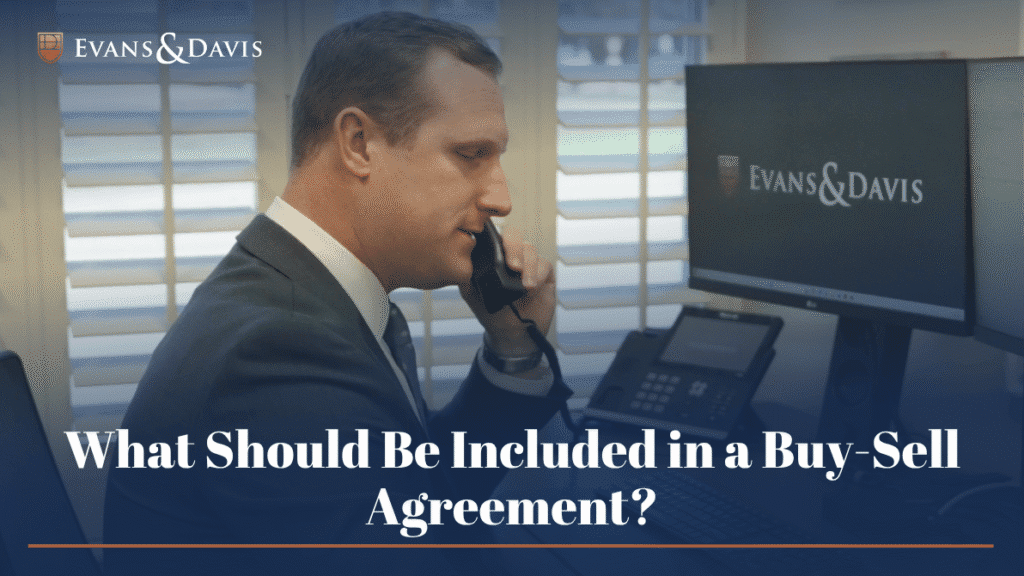
Choosing the right business partner is one of the most important decisions you can make. Equally important is deciding what happens if that partnership changes. Death, disability, retirement, divorce, or even a disagreement between owners can create uncertainty that threatens the stability of an otherwise successful business.

For real estate investors with multiple rental properties, choosing the right ownership structure can affect liability protection, administrative complexity, and long-term planning. In many situations, investors use separate LLCs for individual properties to isolate risk, while others consider a Series LLC, which allows multiple distinct units under a single parent company. The right approach depends on the number of properties you own, the jurisdictions where they are located, and how you want to manage liability and administrative costs.